It emerged last month in Congressional hearings that the Trump Pentagon is conducting a close hold mini review of U.S. nuclear strategy, as several of us had previously recommended. While not large enough to be styled a formal “Nuclear Posture Review” it will still have significant implications for how this Administration—and the United States going forward—envisions nuclear deterrence and assurance in a rapidly evolving, increasingly complex nuclear age. This isn’t surprising as every U.S. Administration since the dawn of the atomic age has reviewed the strategy it inherited, and rightly so. While the participants in the review have not been identified in public testimony, to be compelling, even as a mini-review, it must include representatives from the Pentagon’s Policy office (to include an appreciation of the Administration’s world view), from the Joint Staff (to incorporate the perspective of the Joint Chiefs and of the combatant commands most directly concerned, namely Indo-Pacific Command and the European Command), U.S. Strategic Command (to ensure the feasibility of planning effectively for the concepts chosen), and the Department of Energy’s National Nuclear Security Administration (to ensure any warhead decisions can be implemented). As senior participants in previous studies such as this—across both Republican and Democratic administrations—we would humbly offer some basic guideposts which we would urge the Pentagon to take into account as it proceeds with this review.
First, beware of “mirror-imaging.” There is a long-standing tendency in the academic literature to treat the Russian and Chinese leadership as if they view the world through American eyes and share American norms regarding “reasonable” behavior. That tendency, past and present, leads to inadequate recommendations for U.S. strategies to deter because aggressive, autocratic opponents typically do not share U.S. perceptions and norms. To deter aggression against us and our allies, the United States must threaten to destroy (“hold at risk” in bureaucratic jargon) in the event deterrence fails, what enemy leaders value most. For the past five decades, the intelligence community reportedly has confirmed that Moscow and Beijing, including Putin and Xi today, place highest value on the survival of their regimes, the secret police and intelligence apparatus which sustains and supports the regime, key military capabilities (including their nuclear forces), and their defense industrial base to be those most valuable assets. Deprived of them, the modern Russian or Chinese state would disintegrate. As Henry Kissinger noted at the dawn of the missile age, deterrence “ultimately depends on an intangible quality: the state of mind of the potential aggressor” and as the 1983 report of the bipartisan Scowcroft Commission put it: “Deterrence… requires us to determine as best we can, what would deter [potential enemy leaders] from considering aggression, not what would deter us.”’ The implication of this reality for U.S. deterrence requirements is profound: It shapes the size and character of U.S. forces needed for credible deterrence beyond what otherwise might be our preferred minimum.
Second, any decision to modify this decades-long approach must advance a truly compelling rationale for change. New intelligence information or new interpretations of hostile leaders’ value structures, while highly unlikely, are not impossible. That said they must be based upon broadly agreed new facts which must be communicated clearly and compellingly to the American public, to our allies, and to potential enemies.
Third, if a deterrence strategy is to be effective, the United States must have a force with credible capability to implement the strategy. That force must have the requisite flexibility, survivability, diversity, and size to pose the threat necessary to deter different foes, acting together or separately, under all circumstances. Today our deterrent posture is weakened by two factors: growing obsolescence and a diminishing capacity relative to self-declared opponents. While Russia and China each began substantial campaigns shortly after the turn of the twenty-first century to fully modernize their nuclear forces, the United States essentially took a vacation from tending to our nuclear deterrent—what former CIA Director and Defense Secretary Robert Gates labeled our “holiday from history.” As a result, we are now facing the task of replacing 1970’s-1980’s systems in each leg of our strategic triad simultaneously, thereby straining our defense industrial base. At the same time, it has become apparent that the aggressive and hegemonic aspirations of Putin and Xi, and their coordinated policies and actions on the world stage, require us to deter both Moscow and Beijing at the same time or, even worse, potentially in collusive sequence. The Chinese nuclear threat is no longer a “lesser included case” threat of the Russian one, resulting in the need to deter and achieve objectives against China and Russia simultaneously should deterrence fail.
The template for the strategic force we have today dates back to the late 2000s and only considered deterring what was deemed at the time to be a not particularly dangerous or aggressive Russia and a benign China. “Rogue” states and terrorists were thought to be the remaining sources of real threat, with an attendant significant reduction in the need for nuclear deterrence. The world of 2026 is starkly different and requires a force somewhat larger and certainly more diverse than the one contemplated 15 plus years ago. The needed growth may be modest and does not require us to match and mimic the combined number of Russian and Chinese warheads; in fact, the United States maintains fewer warheads and a smaller overall arsenal than Russia today and has for the past two decades. The United States needs to deploy only what is needed to meet targeting requirements under U.S. deterrence strategy. This can be gained initially by adding warheads and missiles from our reserve stockpile to the existing deployed force, as unanimously endorsed by several high-level bipartisan commissions over the last three years. This option can be accomplished relatively rapidly and at a modest cost. It likely will help mitigate the programmatic risks from production delays and technical challenges as we continue our plans to modernize the entire nuclear Triad. Failure to upload would indicate to both aggressors and partners that we are not serious about the possibility of foes’ planned or opportunistic aggression against the United States or its allies, and thereby in the worst case would invite such attacks.
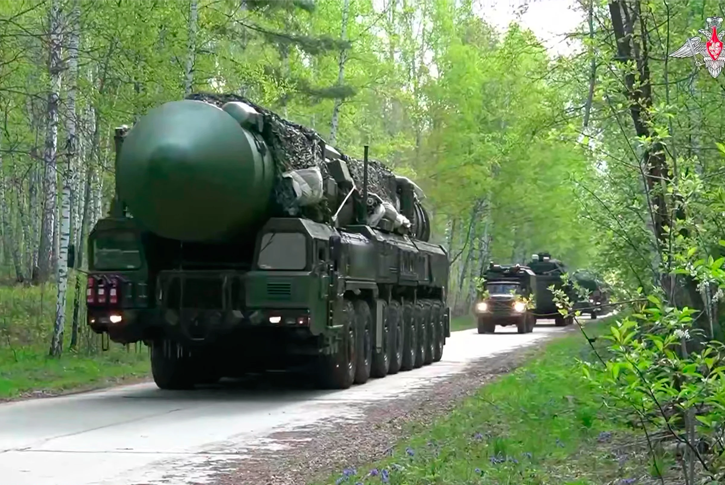
Fourth, following the end of the Cold War we paid scant attention to deterring nuclear blackmail or attack against our allies in Europe and in Asia --Russia was a “partner to NATO,” North Korea was reclusive, and China was expected to rise peacefully--the breadth of China’s ambitions was not yet apparent. As the Warsaw Pact disintegrated and the Soviet Empire receded from Eastern Europe, and with optimistic expectations for the future, Washington pursued a series of arms control agreements with Moscow that eliminated virtually all short- and medium range nuclear weapons in Europe. The United States dutifully carried out this obligation. Moscow did not. It broke those agreements and rebuilt its theater, or tactical, nuclear arsenal such that today Moscow has some 2000 fully modern land-, sea-, and air-launched nuclear systems, reportedly a 10:1 numeric advantage over the United States, which it is using today to bully and coerce our European allies and threaten American service members in Europe.