News

Tracing US influence on Northern Ireland's constitutional politics

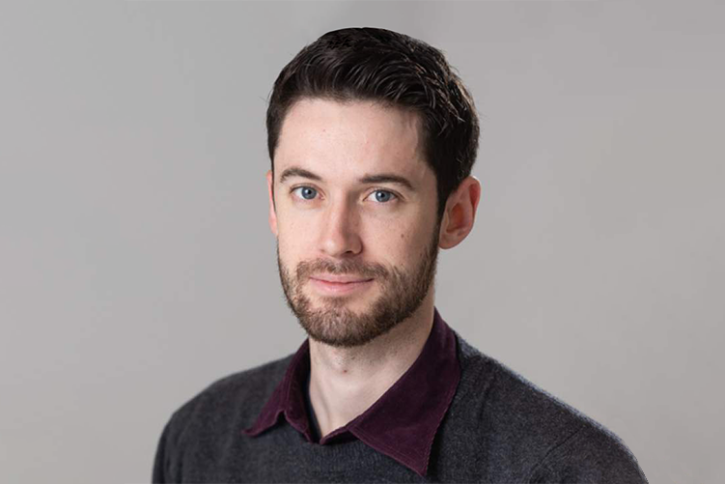
Conor J Kelly, Bingham Early Career Fellow in Constitutional Studies at Balliol College, University of Oxford, spent the summer at MIT's Center for International Studies researching the role of the US in Irish constitutional politics.
October 21, 2026
Center for International Studies
Tracing US influence on Northern Ireland's constitutional politics

Conor Kelly

What is the central question your research seeks to answer?

In recent years, I have worked on two issues related to the constitutional future of Northern Ireland: how can we best reform its power sharing institutions without undermining the peace process there, and if voters opt to leave the United Kingdom and form part of a united Ireland in the future, how best can that process be structured? 

At the moment, I’m thinking about the role of external actors, namely the European Union and the United States of America, on both of those questions. Both the EU and the US played important roles in bringing peace to Northern Ireland, and more recently, we saw their impact on British-Irish relations during the tumultuous Brexit period. 

My research now is asking: under what conditions do international actors act as credible brokers in constitutional processes? And how do international actors shape institutional (re)design in divided societies?

What brought you to Boston for your field research?

My college in Oxford, Balliol, has a long-standing relationship with MIT, with both institutions sending academics in either direction for short research stints. This was quite fortunate for my purposes because Boston is very much the home of Irish America! Many prominent politicians from Massachusetts, including former Speaker of the House Thomas ‘Tip’ O'Neill and Senator Edward ‘Ted’ Kennedy, have their papers deposited in archives at Boston libraries. Their successors in Massachusetts politics also continue to take a keen interest in Irish affairs, and I’ve been reaching out to politicians, journalists, and academics this summer asking them to take part in research interviews for the project.

What did you find most interesting or surprising during your fieldwork?

It was not particularly surprising because I am already familiar with much of it, but I was still struck by how bleak the conflict in Northern Ireland (known as ‘the Troubles’) looked, even from the vantage of Americans, in the 1970s, 80s, and 90s. The archival material included letters from concerned members of the public from across Ireland, Great Britain, and the US, and although they offered very different solutions, almost all of them were imploring politicians to support efforts to end the violence. The level of hostility directed at some US politicians from sections of the media for even attempting to influence the peace process was really interesting.

In terms of my interviews, I was surprised at the level of activity in the Irish diaspora in 2026. There is sometimes an assumption on the other side of the pond that the level of engagement in Irish and British politics is declining because of demographic changes in American society and a general turn away from European affairs in US politics. It was interesting to see the wide range of activities that Irish America is still engaged in, ranging from significant business links, to sport, to the arts, to politics. They exist between Boston and the UK too, though in a different, perhaps subtler way, with many economic and academic links. That said, the Scottish football fans at the World Cup seem to have created an enduring impact on Boston that is far from subtle!

Did your fieldwork or conversations change how you were thinking about the project?

I’m at the stage in the project where what I’m thinking changes by the hour! Coming to Boston definitely reaffirmed my belief that if there is to be significant constitutional change in Ireland, the US government and US-based networks will play a crucial role. 

What are you working on next?

I will begin working on a book proposal that explores the topic of US and EU influence on the future of Irish constitutional politics. I am very grateful to everyone at the MIT Center for International Studies for how welcoming you have been, and for the opportunity to pursue this work while being hosted by you.