
Commentary
The new forever wars
Dafna Rand, nonresident senior fellow, MIT-MENA, on how America gets stuck in its allies’ fights.
Dafna Rand, nonresident senior fellow, MIT-MENA, on how America gets stuck in its allies’ fights.
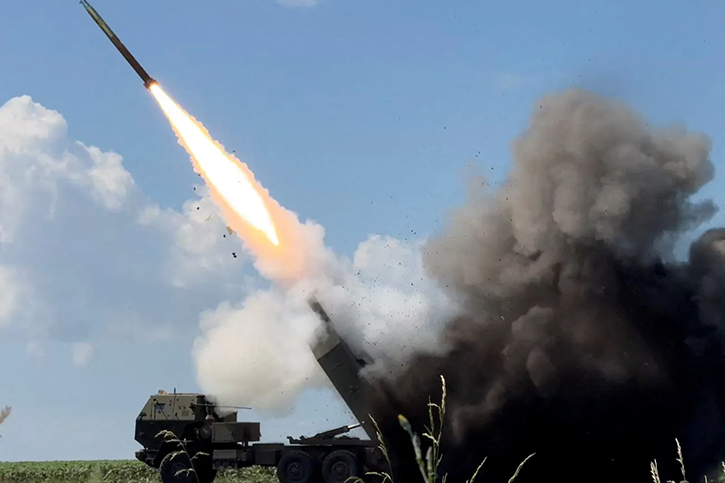
Firing toward Russian troops in the Donetsk region, Ukraine, June 2026
As the United States’ quagmire in Iran makes clear, wars are almost always much harder to stop than they are to start. Over the past 80 years, less than 20 percent of the roughly 300 wars tracked by the Uppsala Conflict Data Program ended in a clear victory by one side. A slightly smaller percentage ended in negotiated settlement; more than 60 percent had no formal ending. And the longer a conflict continues, the harder it becomes to broker a settlement. In wars fought between 1945 and 1989, another study found, mediation succeeded 37 percent of the time when it began within the first one to three months of fighting but only 19 percent of the time when negotiations began a year or more into a war.
The United States’ two-decade war in Afghanistan and decade-plus fighting wars in Iraq were no exception. In the wake of those conflicts, Washington has tried to avoid getting ensnared in so-called endless wars by avoiding deploying boots on the ground. In some cases, that means the United States relies primarily on airpower, as it has in Iran—an approach that comes with its own military challenges. But in many others, instead of participating directly, the United States is equipping close allies to fight shared threats and joint adversaries. Between 2010 and 2025, Washington more than tripled its annual security assistance for allies, from $15 billion to $46 billion, and increased its intelligence support and arms sales.
The United States has backed several of its partners’ wars in recent years. In 2015, Washington began coordinating US intelligence and military support for the Saudi-led coalition fighting the Houthis in Yemen. Since 2022, it has supported Ukraine in its defense against Russia’s invasion. And the United States has aided Israel throughout the war in Gaza following Hamas’s attacks on October 7, 2023. In all three campaigns, Washington supplied or sold the overwhelming share of the military hardware, intelligence support, training, and diplomatic backing. Yet its efforts had mixed results. The United States’ support greatly enhanced the military prospects of allies, but in every case, Washington found itself unable to shape how these wars were fought, and more critically, when and how they might end.
Supporting an ally’s war effort is often in the United States’ interest. But if Washington wants to participate in conflicts from afar, it needs a better strategy for maintaining influence over the primary combatants. It needs to enter with a clear idea of the war’s aims and how to achieve them. It needs to secure its partner’s commitment to the same objectives, to be honest with that partner about how far US backing will go, and to set up mechanisms to ensure that the partner’s military adheres to American standards of conduct in battle. Ultimately, continuing to support allies’ wars without a shared strategy and without clear conditions for aid will not deliver the United States the advantages it seeks. It will only lead to more tension with close allies and more conflicts that don’t end.


