
Commentary
A less-is-more strategy for America
Barry Posen, Ford International Professor of Political Science and former director of the Center’s Security Studies Program (SSP) writes on the folly of expanding the exhausted US Military.
Barry Posen, Ford International Professor of Political Science and former director of the Center’s Security Studies Program (SSP) writes on the folly of expanding the exhausted US Military.
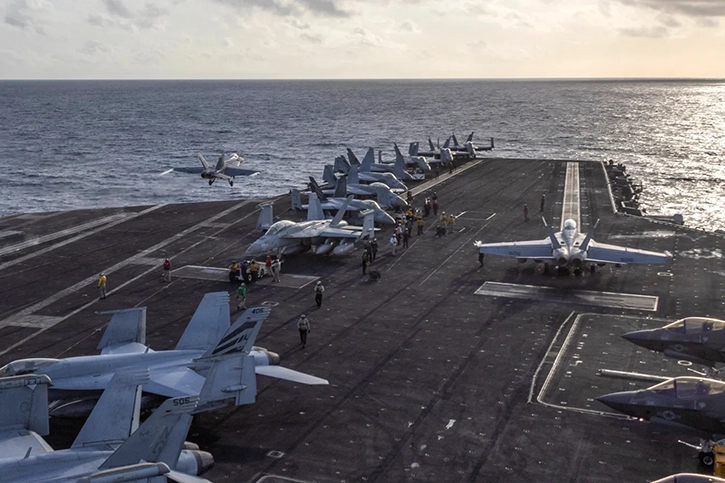
A US aircraft carrier in the Indian Ocean, August 2026
On October 8, the USS Abraham Lincoln and its accompanying strike group returned to the United States after 320 days at sea. The deployment—a near record for the modern American military—had become controversial. As the group’s ships went month after month without a port call, conditions deteriorated precipitously. Sailors reported supply shortages, plumbing issues, and water contamination. Morale dropped markedly; eight sailors even tried to commit suicide. By the time the ships finally left the Middle East, their struggles had made headlines across the country.
The travails of the Lincoln are hardly the only story about the US military to generate alarm since the war in Iran began last February. Military analysts have expressed concern about other carrier groups’ lengthy deployments. They have fretted about the Trump administration’s decision to pull soldiers and weapons stationed in the Indo-Pacific out of the region and position them in the Middle East. Perhaps most of all, they have worried as the United States drains its stockpile of sophisticated munitions.
These problems all share the same root cause: the US military is not built for the near-constant use it has experienced for decades. Ever since the Cold War, American defense planners have structured the US armed forces to be ready to fight two major conflicts simultaneously. In practice, that means Washington has constructed a force that is designed to win short, sharp wars. For that reason, the military does not have enough units, weapons, or personnel to handle never-ending conflicts and simultaneously use its forces around the world to coerce enemies and reassure partners.


