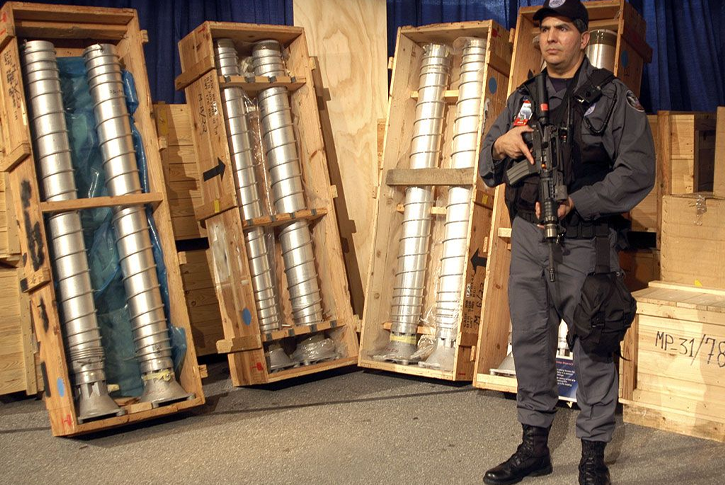
The Trump administration is pursuing two contradictory policies with uranium enrichment: It has insisted that zero uranium enrichment in Iran is necessary to achieve its goal of preventing Iranian access to a nuclear weapon. But the administration has also shown an apparent tolerance for the spread of the same uranium enrichment technology elsewhere as part of its push for expanded nuclear exports. There is an essential tension between the administration’s readiness to use military force to prevent enrichment in Iran while condoning the technology’s spread elsewhere.
President Donald Trump showed greater comfort with the spread of enrichment in two high-level meetings in late 2025. Following his October 29 meeting with South Korean President Lee Jae Myung, the White House stated that the United States now supports “the process that will lead to the Republic of Korea’s civil uranium enrichment and spent fuel reprocessing.” This was a notable departure from past US policy against Republic of Korea enrichment.
A month later, during Saudi Crown Prince Mohammed bin Salman’s visit to Washington, US and Saudi officials previewed a pending nuclear cooperation agreement between the two countries, also known as a “123 agreement.” Past administrations have been unable to conclude such an agreement with Saudi Arabia in part due to Riyadh’s insistence on the need for domestic enrichment, which US policy opposed. While no text has yet been made public officially, President Trump recently approved the agreement, and there are indications that the nuclear cooperation deal will, at the least, leave open the possibility of future Saudi enrichment.
Consistent with a shift in the administration’s direction on enrichment is a May 2025 executive order directing aggressive negotiation of at least 19 additional 123 agreements by the end of 2028—a significant increase from the 26 such agreements currently in force. These deals could be a boon for US leadership in the responsible global expansion of nuclear energy and potentially help strengthen nonproliferation standards. However, with the clock ticking to meet the president’s tight timeline, US negotiators may seek to relax past positions on enrichment if they are perceived as impeding agreement.