The Trump administration’s policy toward China remains difficult to parse, but calls to “de-risk” the U.S. economy or even to completely decouple from China still dominate Washington’s strategic debates. Advocates for decoupling urge the United States to revive domestic industries and make them resilient to external shocks, to “friend shore” key supply chains to allies and other well-disposed countries, and to secure reliable access to critical resources. Without such measures, analysts warn, China could strangle the U.S. economy in a crisis. Already, Beijing’s decision in 2025 to block the export of certain rare-earth metals to the United States set alarm bells ringing in Washington. Analysts bemoan the possibility of “weaponized interdependence” and point to the vulnerabilities caused by the entanglement of the American and Chinese economies through globalization. This dynamic can have extreme implications. If a crisis between the United States and China were to somehow escalate to war, China could withhold important materials and components necessary for the defense industrial base, but it could also withhold other critical exports, such as pharmaceuticals.
At the core of this fear is a simple unquestioned assumption: when war starts, trade ends. It is this same assumption that underpins the familiar commercial peace theory that holds that the more countries trade with one another the less likely they are to wage war against one another. But just as it is clear that even high levels of economic interdependence do not foreclose the possibility of hostility between states, so, too, is it the case that countries that are fighting can still maintain commercial ties. States often continue to trade with one another even when they are at war.
Since the Crimean War in 1854, belligerents in most great-power wars chose to maintain their trade ties. Russia in the Crimean War, for example, continued to sell to the United Kingdom many of the raw materials that the British needed for industrial production. At the start of World War I, one of the deadliest conflicts in modern history, the United Kingdom permitted the export of machine guns to its enemies. During the Indo-Pakistani War of 1965, India exported steel, iron, and coal to Pakistan.
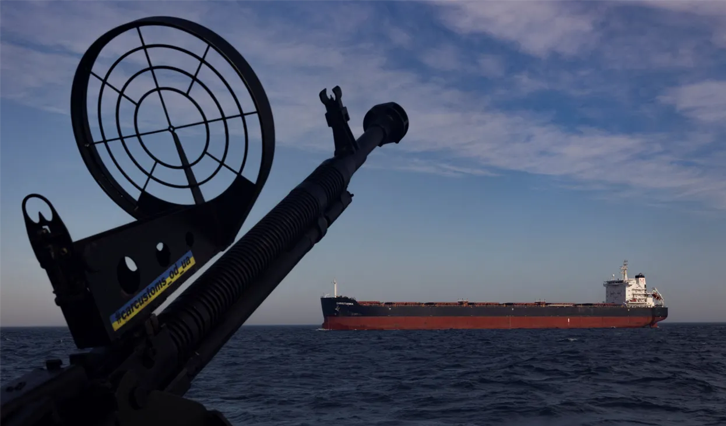
The pattern persists to the present day. Trade between India and China actually increased in the early 2020s despite clashes that killed dozens of soldiers in 2020 and an eight-month border standoff between the two states. For nearly three years, from February 2022 to January 2025, Russian gas continued to flow through Ukrainian pipelines even as casualties mounted on the battlefield; Russian oil still flows through Ukraine.
Trade may not prevent war, but war does not have to stop trade. States calibrate their wartime trade to maximize the economic benefits to their domestic economies while minimizing the military advantage that policy provides their adversaries. That nuance allows many countries to keep trading even when they are foes during wartime. By holding on to the erroneous assumption that trade is the first casualty of war, U.S. policymakers risk misjudging what economic coercion can achieve. In doing so, they not only overestimate the leverage China holds in a crisis, they also overestimate the nature of American economic leverage. This mistaken belief can encourage policymakers to pursue costly strategies that promise increased security in theory but may do little to reduce vulnerabilities in practice.