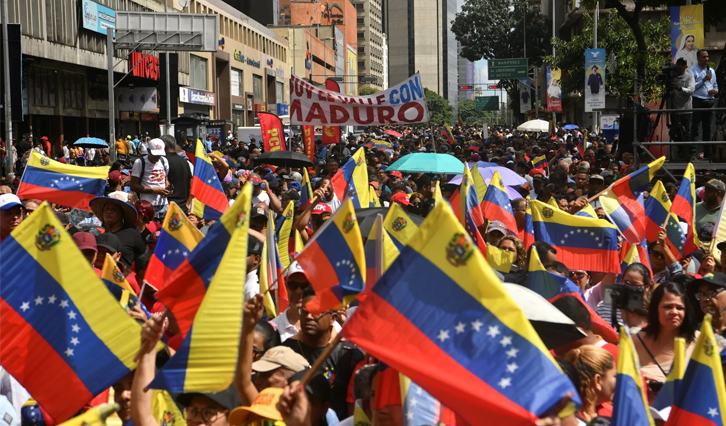
The stunning military ouster of Nicolás Maduro underscores a hard truth about modern economic statecraft. For over 20 years, the Venezuelan regime has been subject to an increasingly expansive U.S. sanctions regime as the main alternative to the use of force, targeting individuals, oil revenues, financial channels, and other public and private sector entities. Those sanctions imposed real economic damage and narrowed the regime’s economic options. But they never generated decisive leverage sufficient to force a change in the regime’s core objectives or to improve U.S. security interests; efforts to escalate or ease sanctions over time instead underscored how difficult they are to calibrate in practice.
In part, this is because Maduro’s regime adapted, using technology and third-country networks to shift activity into alternative channels and push the burden of sanctions onto civilians, intermediaries, and foreign firms, while insulating the leadership itself. This kind of sanctions avoidance does not erase pressure but shifts it—allowing regimes to reroute activity through costlier and less transparent channels rather than change course.
The geopolitical lesson is sobering. Sanctions remain a valuable tool for imposing some costs and signaling U.S. (and international) opprobrium. And we are only beginning to learn about the impacts over time of relatively new individualized sanctions, which targeted nearly 1,000 Venezuelans since the 2010s. In Venezuela, Russia, Iran, and elsewhere, however, sanctions are blunted when regimes can externalize pressure and wait out economic pain; they work best when embedded in diplomatic strategies that can translate cost imposition into political outcomes. Venezuela reminds us that economic leverage depends not just on scale, but on strategy—and on realism about what sanctions can and cannot achieve.